Last updated November 22, 2026
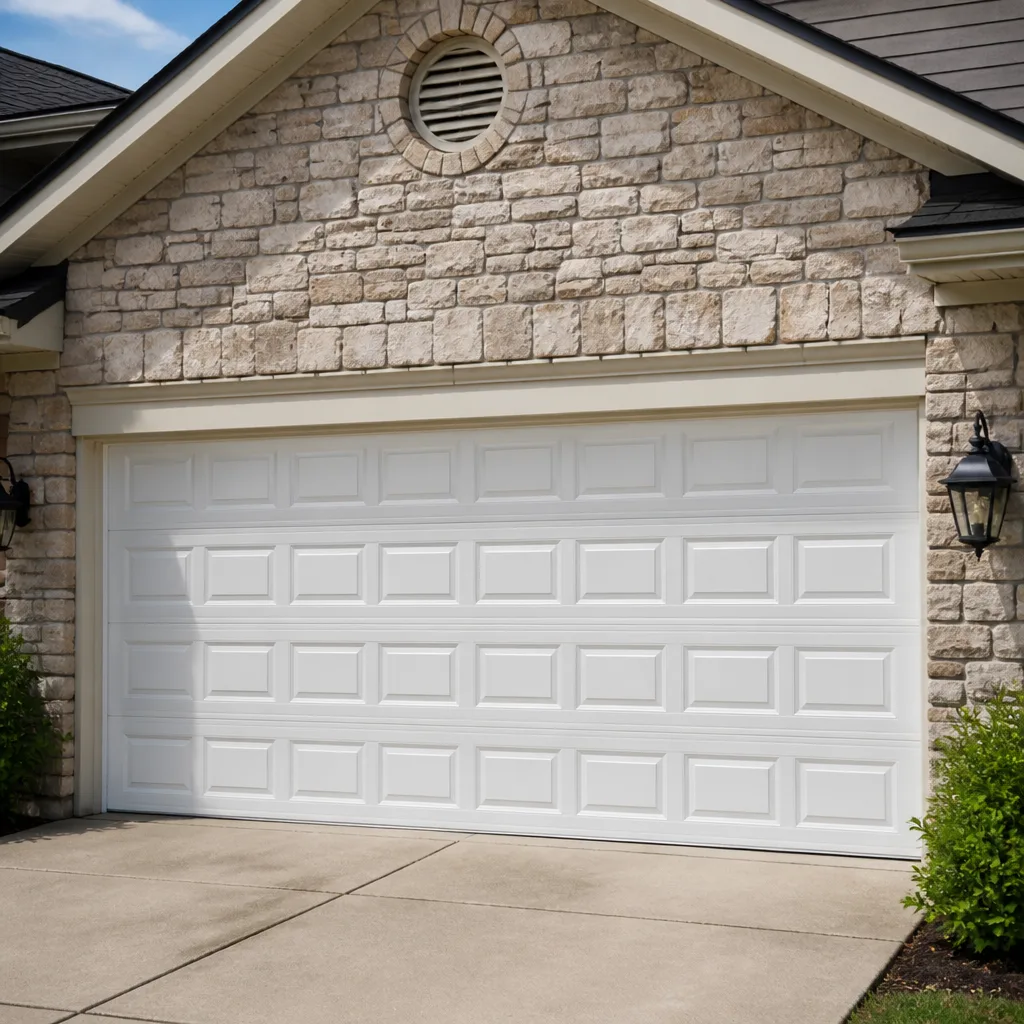 Raised-panel steel
 Carriage house
 Modern flush
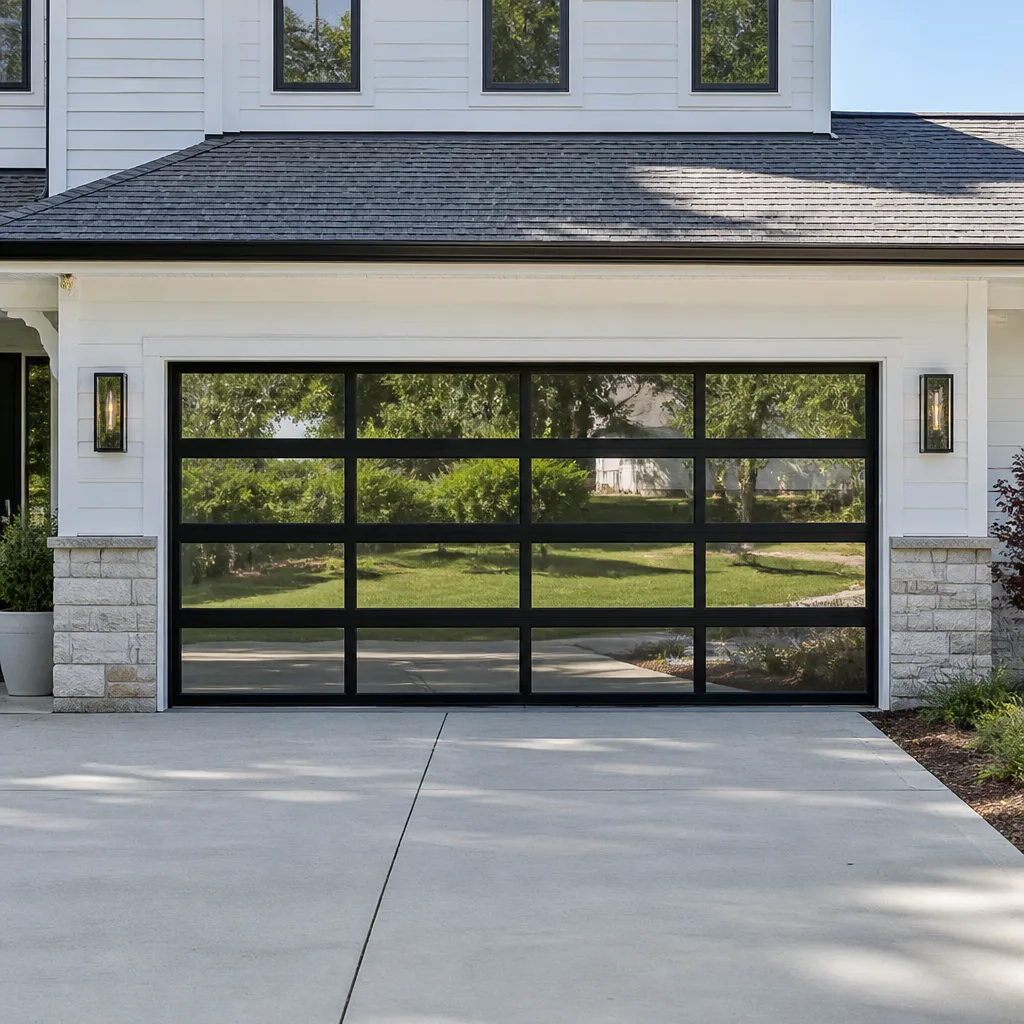 Full-view glass
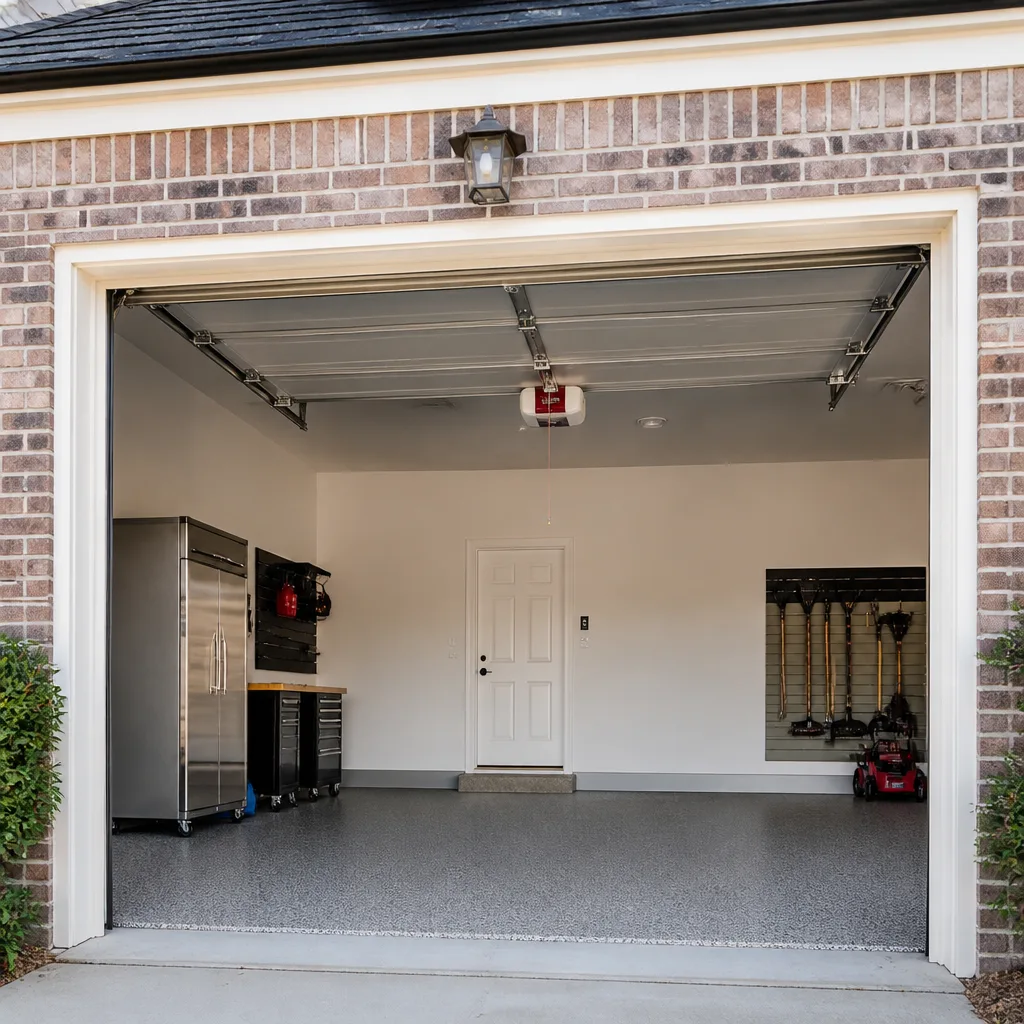 LiftMaster openers
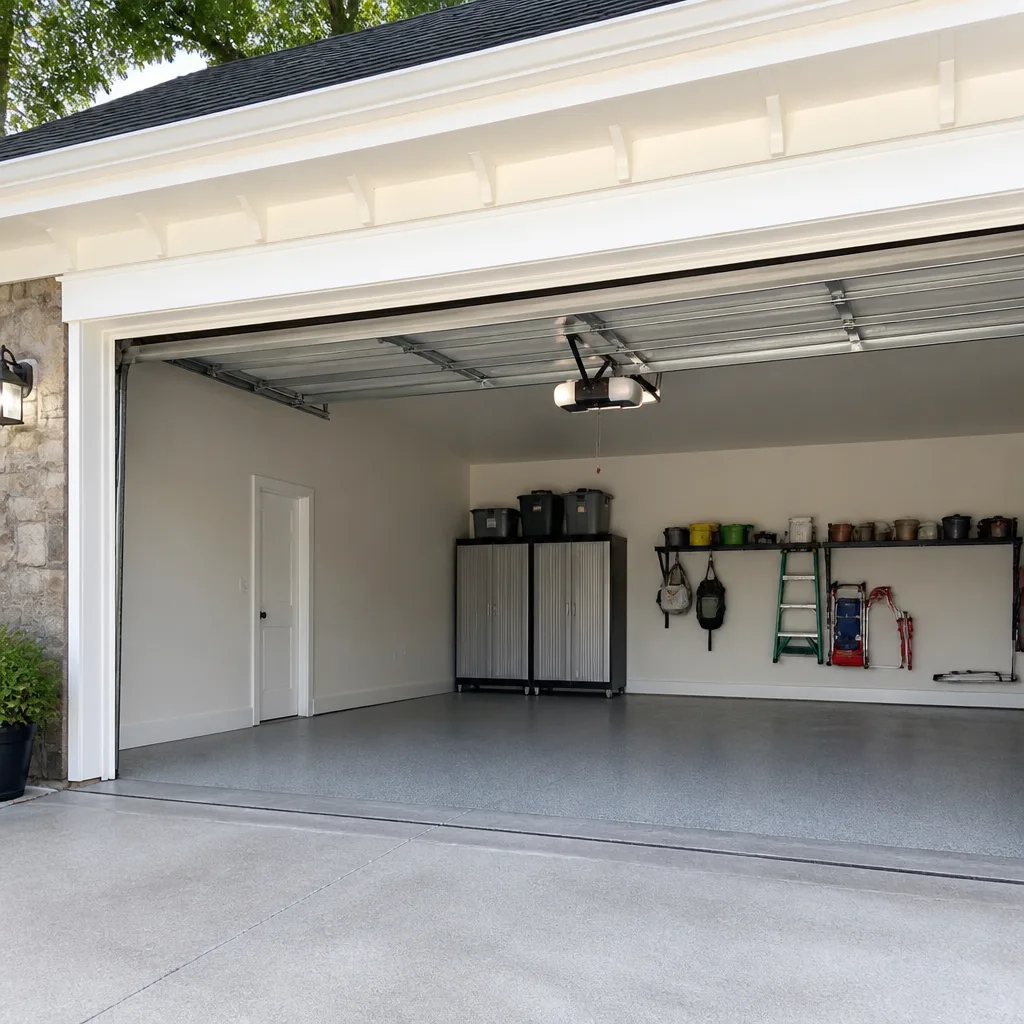 Chamberlain openers
Full 25-point door and opener safety check with every visit - springs, cables, rollers, tracks, and your LiftMaster or Chamberlain opener included
You get a price before we start. It does not change when the pro arrives.
Get your free estimateGarage Door Repair Maintenance Checklist for Snell Isle Homeowners
Most garage door maintenance checklists floating around the internet were written for four-season climates, and they get the priorities wrong for Snell Isle. The failure we see most often in Snell Isle isn’t skipped lubrication on a neglected door. It’s homeowners applying the wrong lubricant to hardware that’s already showing oxidation, which speeds up corrosion instead of slowing it down. The other big miss is the weather seal, which here takes a beating from intense sun long before it wears out from use. This guide walks through a maintenance routine sequenced around Snell Isle’s real threat calendar: the intense summer sun, the months of storm prep before hurricane season, and the post-storm inspection that most homeowners skip. You’ll learn the monthly, quarterly and annual tasks that matter, what to inspect safely without touching spring tension, and what to document so a technician can diagnose a problem fast when you do call.
Quick Answer
A good garage door maintenance routine for Snell Isle homeowners has three layers. Monthly, you check the door’s balance and listen for new noises. Quarterly, you lubricate the right hardware with the right product, inspect the weather seal for sun damage, and test the safety reverse. Annually and before hurricane season, you do a full inspection of cables, rollers, hinges and opener, and you document conditions with photos and dates. Springs and cables under tension are never a homeowner job; leave that to a trained technician.
Styles & brands we work with
- Raised-panel steel
- Carriage house
- Modern flush
- Full-view glass
- LiftMaster openers
- Chamberlain openers
Table of Contents
- Why a Snell Isle Checklist Looks Different
- Monthly Checks
- Quarterly Checks
- Annual Checks and Pre-Hurricane-Season Prep
- The Right Lubricant (and the Wrong Ones)
- Inspecting Weather Seals for Sun Damage
- Cable and Drum Inspection You Can Do Safely
- What to Document for Faster Diagnosis
Why a Snell Isle Checklist Looks Different
If you’ve read a maintenance article built for a cold-weather market, you’ve probably been told to brace for frozen parts and winter stress. None of that applies in Snell Isle. Our stress comes from heat, humidity and relentless sun. Those forces wear a garage door system in specific ways, and they reward a different set of checks.
Sun exposure is the biggest one. The seal that runs along the bottom of the door and around the perimeter faces the same UV load as anything else outdoors in Snell Isle, and it fails by becoming brittle and cracking rather than by wearing thin. Once a seal dries out, it stops sealing. Rain and humidity find their way in, and you start seeing rot, rust and pests that a healthy seal would have kept out.
Humidity is the second force. It doesn’t just make things feel muggy. It accelerates oxidation on metal hardware: hinges, rollers, track, and the drums that carry the cables. A little surface rust is normal. Rust that feeds on moisture and no protective lube becomes pitting, and pitting turns into stiff rollers and squealing hinges. That’s why the lubricant you choose matters so much here, and why the wrong one can make the problem worse.
The third local reality is hurricane season. From late spring through fall, Snell Isle homeowners should be thinking about whether their door will hold up to a storm and, just as importantly, how to inspect it after one. A door that’s slightly out of balance or has a weakening hinge can handle everyday use fine and then fail when a storm loads it.
So this checklist is ordered around those three forces, not the seasons you’d see in a textbook. We’ll start with the low-effort monthly checks you can do in a few minutes, then build up to the heavier quarterly and annual routines.
Monthly Checks: Five Minutes That Catch Small Problems Early
Once a month, spend five minutes with your door and you’ll catch most developing problems before they become repairs. None of these checks require tools or technical skill, and none of them put you near spring tension.
- Balance test. Disconnect the opener using its manual release, lift the door to about halfway, and let go. A healthy door stays roughly where you put it. A door that drifts down on its own, or shoots up, is out of balance. That usually points to spring tension or a worn track, and it’s a sign to call a technician rather than adjust anything yourself.
- Listen. Open and close the door while you stand outside. You’re listening for grinding, squealing, popping or a harsh rattle. New noises are worth noting; a steady squeal usually means a dry roller or hinge that needs lubrication. A popping sound, especially one that comes and goes at the same point in the door’s travel, means stop using it and get it looked at.
- Watch the door travel. Does it move smoothly and stay level, or does one side lag? A door that binds on one side is riding wrong in its tracks.
- Look for rust you didn’t have last month. Any orange or brown coloring on hinges, rollers or track is your cue to act on lubrication before the rust progresses.
- Check the opener’s behavior. If your Genie or LiftMaster opener hesitates, reverses without reason, or its light flickers, that’s information. Note it.
Five minutes a month in Snell Isle will catch more issues than an hour of intense work once a year. The point isn’t to fix anything; it’s to know what’s changing.
Quarterly Checks: Lubrication, Seals and Safety Reverse
Every three months, step up the routine. The quarterly pass is where you actually maintain the hardware and test the safety features that protect people and property.
Lubricate the right parts. Apply a garage-door-specific lubricant to the hinges, rollers, the bearing plates, and the track where the rollers ride. Don’t grease the track’s flat surface; you want a light film on the moving parts, not a slippery ramp. (More on which lubricants to use and avoid in the next section.)
Wipe and inspect. Before you lubricate, wipe the hinges and rollers with a dry cloth. That removes surface dust and lets you see whether you’re dealing with light surface rust or something deeper. In Snell Isle’s humidity, a clean and slightly lubricated hinge resists oxidation far better than a grimy one.
Test the safety reverse. Every opener made by the major brands, including LiftMaster and Genie, has a safety reverse feature. Test the photo-eye system by placing a small object in the door’s path and closing it; the door should reverse. Then test the mechanical reverse by laying a piece of wood flat in the door’s path. If the door doesn’t reverse, stop using the opener and get it serviced. The door’s weight is heavy enough that a bad safety reverse is a genuine hazard.
Inspect the weather seal. Run your hand along the bottom seal and the perimeter seal. They should be pliable. If they feel hard, cracked or powdery, they’re done and need replacing. July and August are when sun-brittled seals show their damage; checking them now gives you time to replace the seal before the rainy season stresses the door.
Check the door’s hardware for loose bolts. Use a socket or wrench to snug any that have worked loose. Don’t over-tighten; you’re only removing play.
Annual Checks and Pre-Hurricane-Season Prep
Once a year, ideally in late spring before hurricane season, do a full inspection of the whole system. This is also the right time to bring in a technician for the checks that require training, because some of it genuinely isn’t safe for a homeowner.
Here’s what a thorough annual routine involves, ordered to keep you safe:
- Visual inspection from a distance. Stand back and look at the door as a whole. Is it sitting square? Are the panels straight, or is one sagging? A Clopay or Amarr steel door that’s been hit or strained may show panel deformation you’d miss up close.
- Check the tracks. Look for bends or dents. A track that’s been bumped will bind a roller, and a track that’s pulled out of plumb will make the door work harder than it should. Straighten a simple dent carefully or get it seen to; don’t force the door.
- Inspect the cables and drums. This is a visual check of the cable along its run for fraying, kinks or stray wires. It doesn’t involve touching the spring. If you see anything wrong, stop and call.
- Test the opener force and travel limits. Many openers, including LiftMaster and Chamberlain models, have adjustment controls; the manual tells you how. If settings drift out of spec, the opener may push too hard or not enough. If you’re not sure, leave that to a technician.
- Have the spring system checked by a professional. Springs, torsion bars, and their anchoring hardware are under extreme tension and must not be touched by anyone other than a trained technician. A technician can measure spring tension and identify a spring that’s weakened or nearing end of life, which is well worth doing before hurricane season puts extra load on the system.
- Document everything you see, as photos and dates. More on that next.
The Right Lubricant (and the Wrong Ones)
The single biggest maintenance mistake we see in Snell Isle is the wrong lubricant. Homeowners reach for whatever spray is in the shed. On hardware that’s already showing oxidation, that can make things worse.
What to use:
- A garage-door-specific lubricant (a silicone-based or lithium-based spray, or white lithium grease) on hinges, rollers and bearings.
- A silicone spray on the weather seals, which keeps them pliable and helps them resist UV.
- A light film rather than a heavy coat. Excess grease collects grit and holds moisture against metal, which is exactly what you don’t want.
What to avoid:
- WD-40 on corroding hardware is not a fix. It’s a light solvent-style product that displaces water and loosens stuck parts, but it doesn’t leave lasting protection, and it can wash away whatever protection was there. On a Snell Isle hinge that’s already oxidizing, it can make the rust return faster.
- General-purpose motor oil on tracks, rollers or hinges. It runs, drips and attracts dust.
- Anything on the spring. Springs are not lubricated by homeowners. Leave them alone.
Wipe hardware before lubricating so you’re applying product to clean metal. If you’re not sure which product is right for a Wayne Dalton or Clopay door’s specific hardware, a quick call is cheaper than a rusted hinge. And if a hinge is already badly corroded, replace it rather than lubricating it; replacing a hinge is far less work than waiting for it to seize up.
Inspecting Weather Seals for Sun Damage
Weather seals fail by UV degradation long before they wear out mechanically, and Snell Isle’s intense sun makes this a predictable failure point. The rubber on a bottom seal or a perimeter seal goes from pliable to hard and cracked over a few sunny seasons.
How to check:
- Run a gloved finger along the bottom seal. It should feel soft and rubbery. If it feels hard, smooth or powdery, it’s dries out and needs replacing.
- Look for cracks on the bottom edge and along the seal’s face. Cracks mean water will get past it.
- Check the perimeter seals around the top and sides of the door. This is where a seal that’s dry-rotted lets rain and humidity in.
- Test the seal by closing the door and looking for daylight at the edges. Light coming through means a gap.
A hardened seal also makes the door work harder, because the door has to push against stiff rubber on every close. Replacing a bottom seal is a straightforward job and one a technician can do quickly, and it’s worth putting on your pre-hurricane-season list. In a storm with rain, a compromised seal lets water in, and water in the tracks is a much bigger problem than water on the floor.
Cable and Drum Inspection You Can Do Safely
Cables and drums deserve their own section because they’re often misunderstood. You can inspect them visually. You must not touch the spring tension that the cables are connected to.
Here’s the safe approach:
- Look at the cables along their full run. A healthy cable is smooth and unbroken. Check for frayed strands, kinks, a bird-caged section, or anything that looks like a loose wire poking out.
- Check the drums at the top corners of the door. The cable should be wound evenly on each drum. A cable that’s jumped the drum or is wound unevenly is a problem.
- Look for slack or sagging cable. A loose cable is a sign the cable or its hardware has an issue, and it should be looked at by a technician.
- Look for rust or discoloration on the drum. In Snell Isle, drums see a lot of humidity. Rusted drums mean a replacement is likely.
- If anything looks wrong, stop and call. Do not attempt to rewind, tighten or adjust a cable yourself. Cables are under spring tension and a snapped cable can strike with enough force to cause serious injury. That’s the single reason we keep saying to call a technician on anything cable-related.
This is exactly the kind of check that’s worth knowing but crucially is not worth attempting beyond the visual stage.
What to Document (So a Technician Can Diagnose Faster)
When you do call, what you can tell a technician shortens the diagnosis and often the visit. Good documentation turns a “not sure why it’s doing that” call into a specific diagnosis. Here’s what to keep:
- Photos of the door and hardware. Take a shot of the whole door, plus close-ups of each hinge, the springs region, rollers and the track, and the weather seal. A photo from a lifted angle helps even if the issue feels obvious.
- A short video of the door in motion. Record a full open-close cycle. Any hesitation, binding or unusual sound shows on video.
- Notes on sounds and where they occur. “A squeak at the top-left hinge during the upper third of travel” is the kind of detail that narrows things down fast.
- Dates and conditions. When did the symptom start? Did it begin after a storm, after a temperature change, or spontaneously?
- The door and opener model. Look for the manufacturer label on the door edge and the opener. Knowing it’s a Clopay door with a LiftMaster opener, or a Wayne Dalton with a Genie, means techs can come prepared with the right parts. Note the brand even if you can’t find a model number.
- Your observations during the monthly checks. “The door drifted down when I tested balance last month, then stopped” is a real clue.
Keep all this in one folder on your phone, and update it when something changes. It makes the next call faster, and it helps you know whether something is trending worse.
Common Mistakes to Avoid
- Using WD-40 on rusted hardware. It’s a temporary fix at best and can strip protection and speed up oxidation on Snell Isle’s humid hardware. Use a garage-door-specific lubricant instead.
- Lubricating the spring or forcing springs by hand. Springs are under extreme tension. Never touch them. This is a job for a technician, full stop.
- Ignoring a weather seal that’s gone brittle. By the time a bottom seal feels hard, it’s already letting water and humidity in. Replace seals before they fail rather than after the storm.
- Skipping the pre-hurricane-season inspection. A door that just barely works in normal weather is the one most likely to fail under storm load. Time that annual inspection for late spring.
- Ignoring new noises and telling yourself it’s “just how it sounds now.” A new squeal or grind is the cheapest repair you’ll ever get, because you catch it early. Waiting converts it into a worn part or a broken cable.
- Adjusting opener force or travel limits without knowing the spec. An opener that’s set too high wears the door; too low and it doesn’t close reliably. Follow the manufacturer’s manual or call a technician.
- Trying to rewind or adjust a cable yourself. Cables are under the spring’s tension and can snap with serious force. Always a technician.
See the difference
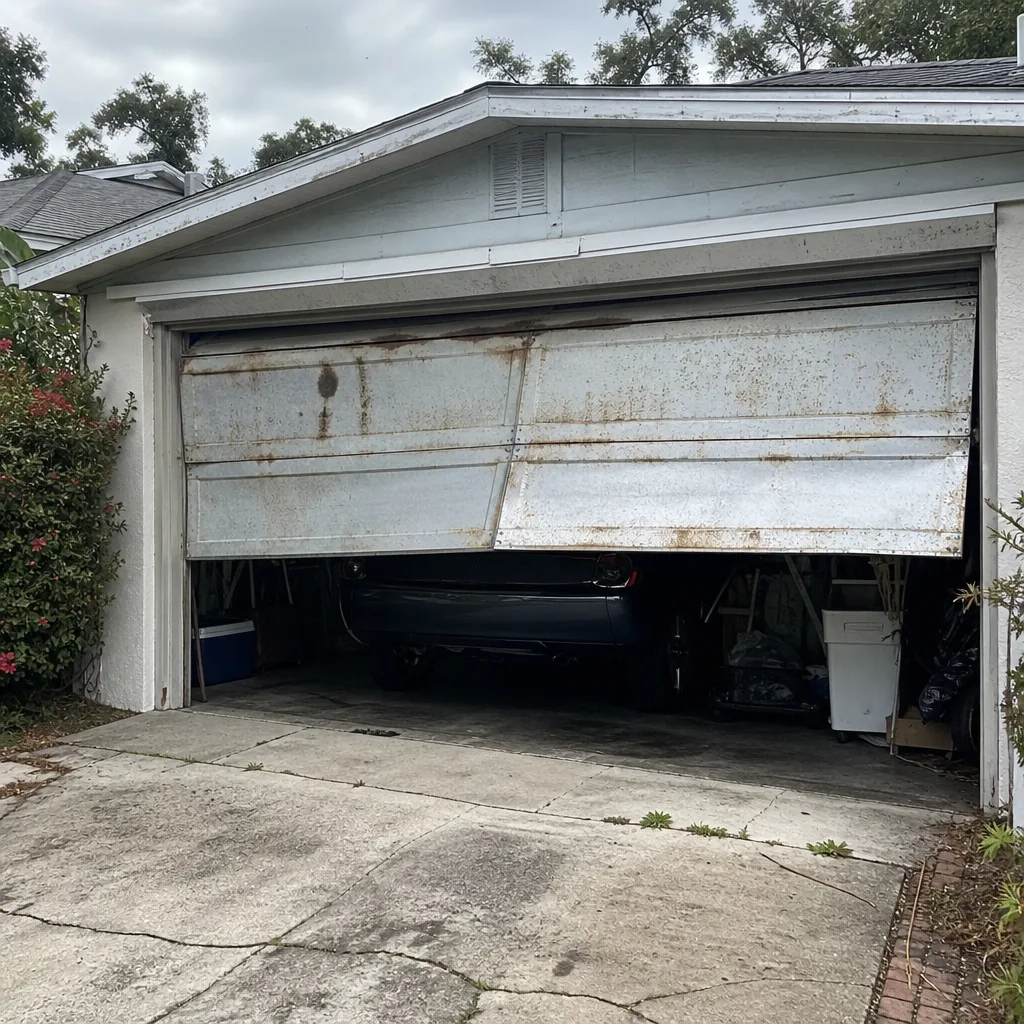 Before
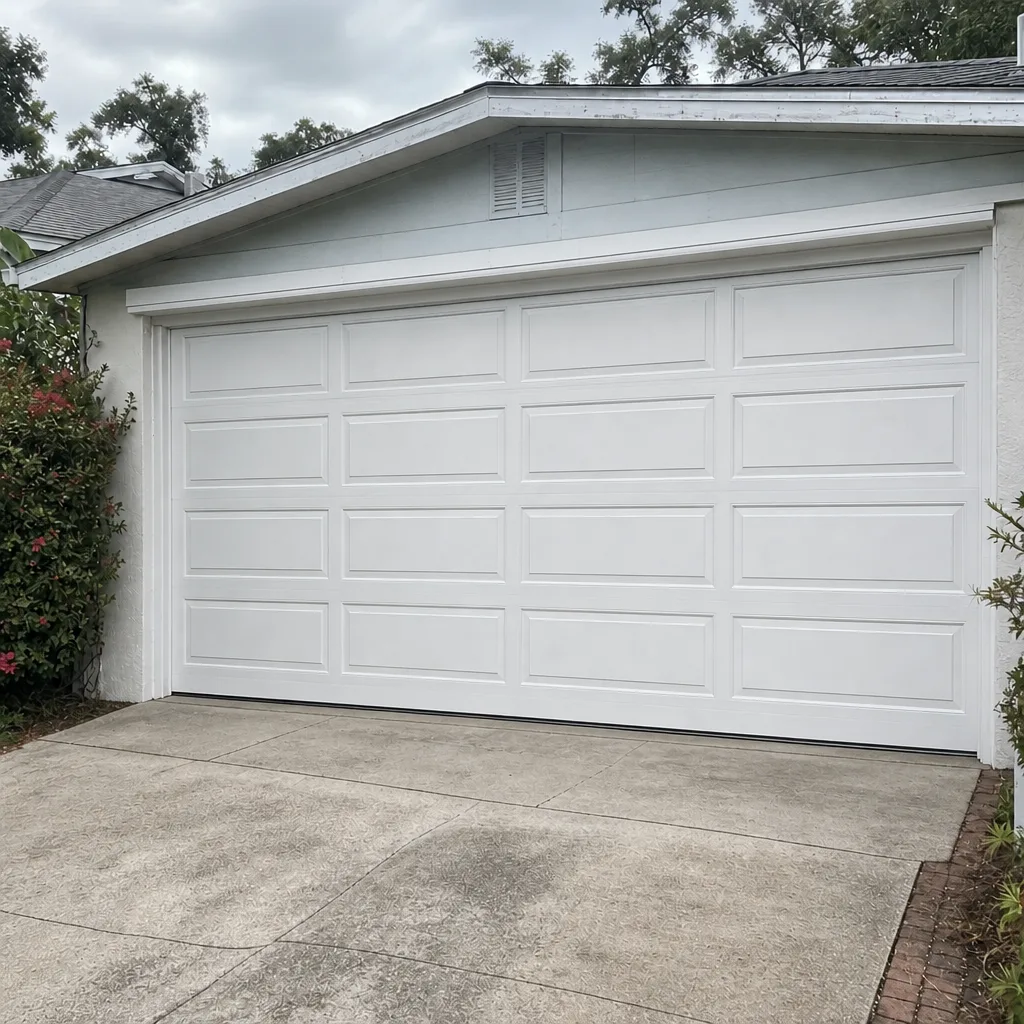 After
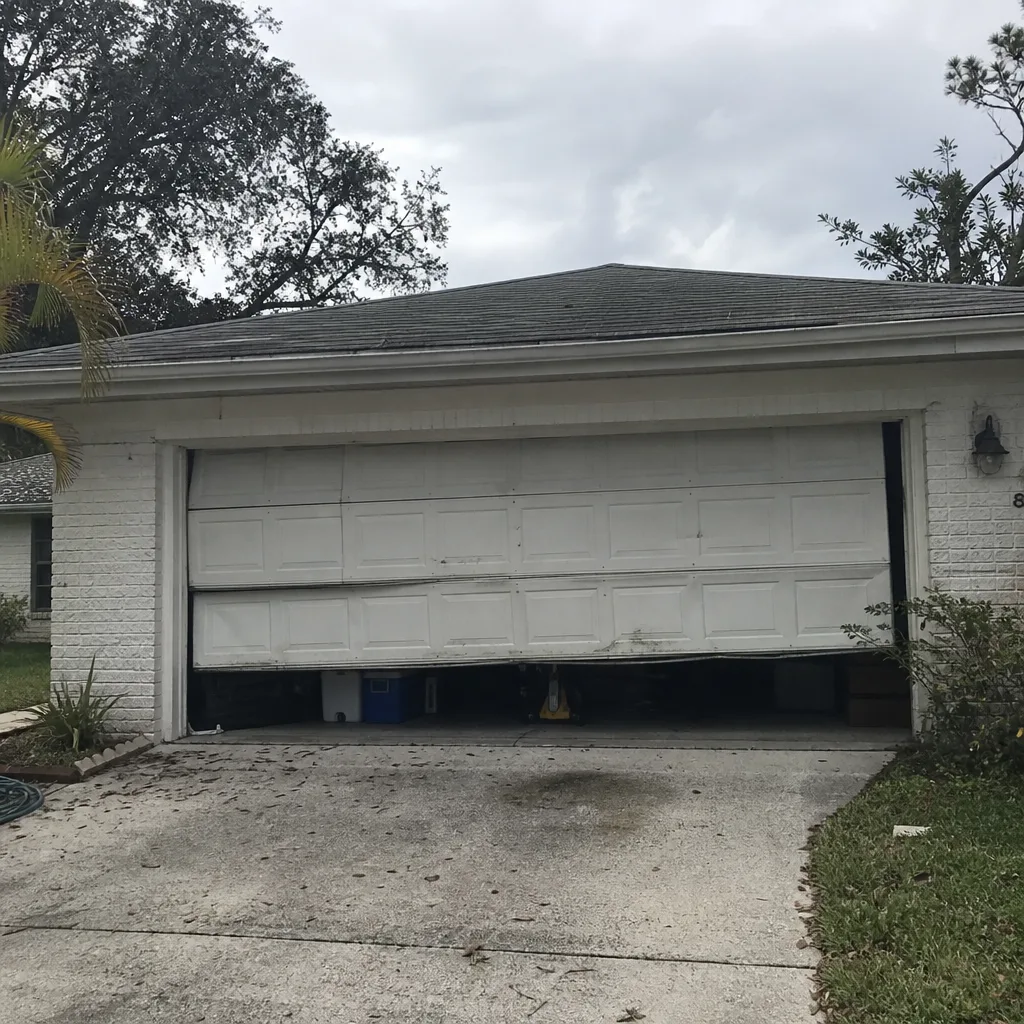 Before
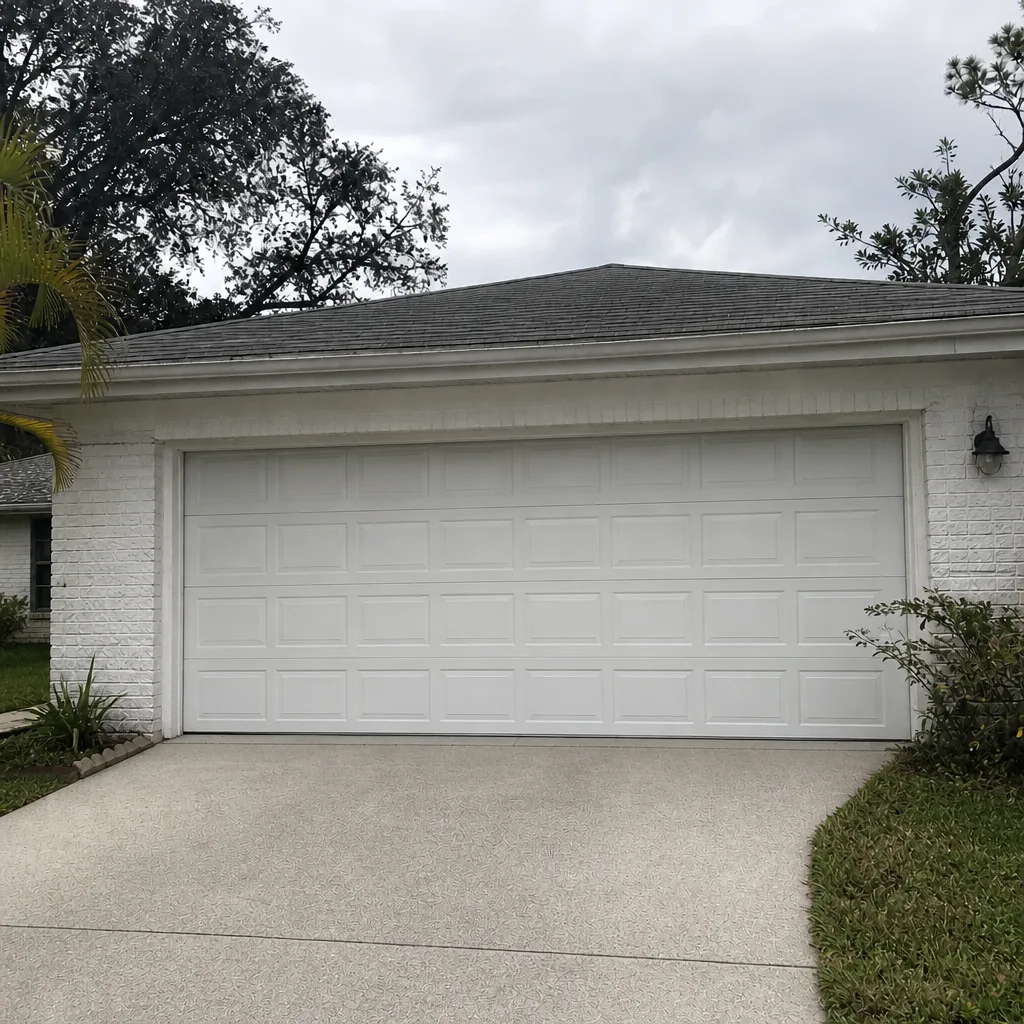 After
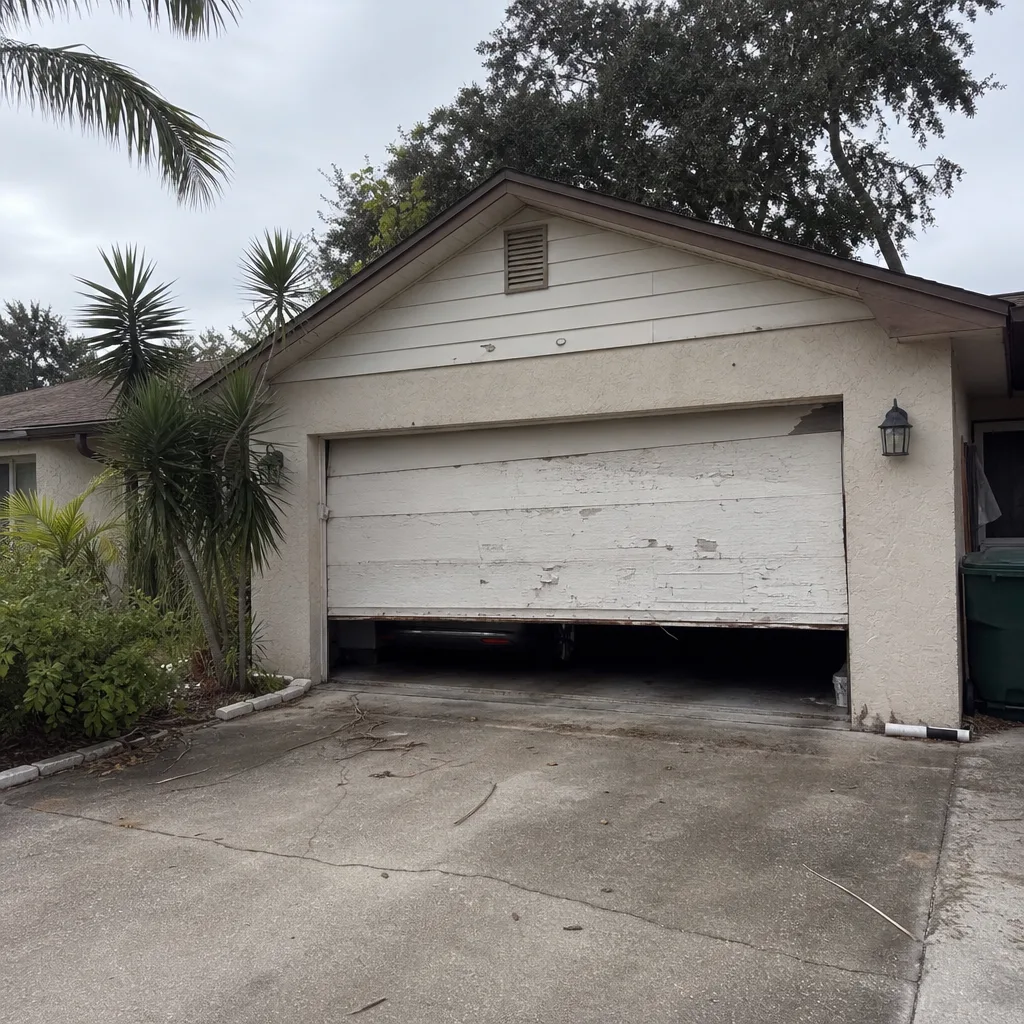 Before
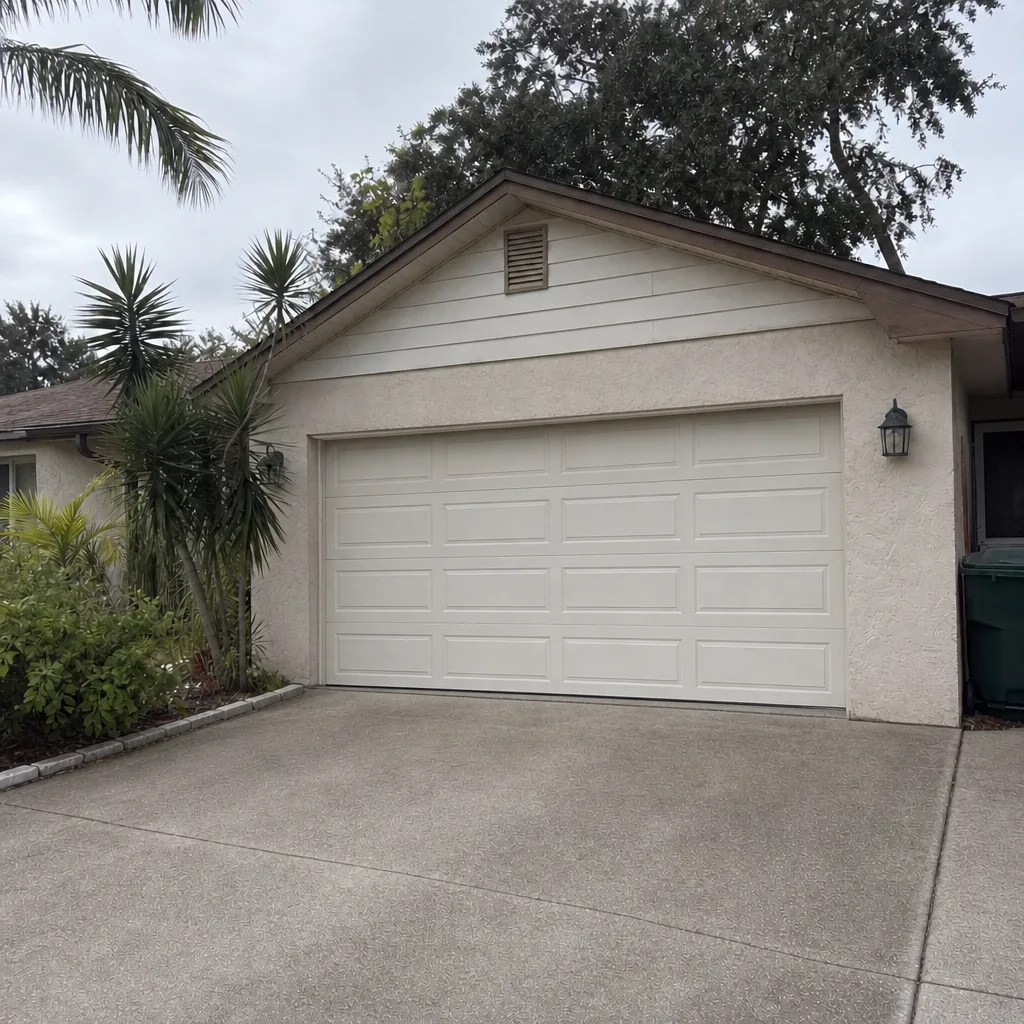 After
When to Call a Professional
Some jobs on a garage door belong to a homeowner, and some really don’t. Call a trained technician when a spring is visibly broken or seems weak, when a cable is frayed, kinked or loose, when the door is out of balance or binding, when the door’s panels are damaged, when the opener’s safety reverse fails, or when any part has started making a new popping or grinding noise. Also call when you’ve tried the safe home checks and can’t pin the problem down. We’re a garage door specialist rather than a generalist, which means anything from an opener glitch to a full replacement falls within our scope, and we handle spring repair as a core service rather than a subcontract. If a Genie, LiftMaster, Clopay, Amarr or Wayne Dalton system needs a proper look, we work on your brand. Garage Door Repair Snell Isle offers free estimates in Snell Isle, so call (855) 337-1755 and we’ll assess it in person.
Frequently Asked Questions
No. Garage door springs are under extreme tension, and a single mishandled spring can cause serious injury. A broken spring is a technician job, every time. Call a specialist, leave the door alone in the meantime, and treat it as an urgent repair.
Quarterly is a good rhythm for most Snell Isle homes. The humidity and sun here push hardware harder than in drier climates, so a light lubrication every three months keeps hinges, rollers and bearings in better shape. Wipe the hardware first and use a garage-door-specific product.
Usually it’s the wrong lubricant or a part that’s already corroded and needs replacing. In Snell Isle, a hinge that’s been greased with the wrong product under high humidity may rust beneath the grease. Check each hinge and roller visually and replace anything with visible pitting rather than trying to lubricate it.
If the seal feels hard or powdery instead of pliable, or you can see cracks in it, it’s UV-damaged and ready for replacement. Snell Isle’s sun is strong enough to dry out seals well before mechanical wear would. Replacing the seal is a quick job and it should be on your pre-hurricane-season list.
Only if you follow the manufacturer’s manual exactly. Otherwise, call a technician. An improperly set force can cause the door to reverse unexpectedly or fail to reverse at all, and that’s a safety issue. If your opener’s behavior is erratic, have it checked.
Call with specific details: what the door is doing, the sounds, the brand (Clopay, Amarr, Wayne Dalton, LiftMaster, Genie and others), and when the problem started. Photos and a short video help a technician diagnose before arriving. We offer emergency garage door service for doors that won’t open, won’t close, or pose a security risk, and free estimates. Call (855) 337-1755.
The Bottom Line
Maintaining a garage door in Snell Isle is less about following a generic checklist and more about matching your routine to the forces that are actually hard on hardware here: sun, humidity and hurricane season. Do the five-minute monthly checks, lubricate quarterly with the right product, inspect and replace weather seals before they dry out, and do a thorough annual inspection in late spring before storm season. Document what you see so a technician can diagnose fast when you call, and never touch springs or cables yourself. If your system needs a proper look, Garage Door Repair Snell Isle offers garage door repair, garage door opener repair, and garage door installation with free estimates. Call (855) 337-1755 for a free estimate and we’ll walk you through the next step.
Written by the team at Garage Door Repair Snell Isle.